Common goals,
different values.
How to build social well-being and commitment to global challenges in a culturally sensitive way
Summary
ADDRESS THE SOCIAL ASPECTS OF DEVELOPMENT
Modern societies are ambivalent about the future: belief in the benefits of further technological development is coupled with strong concerns about the breakdown of social ties. Is the progressive atomisation of social life the only future scenario? How can we counteract the negative emotions associated with the prospect of progressive digitalisation Research by the Institute of Psychology of the Polish Academy of Sciences shows that policies that support the social aspects of society’s development (promoting togetherness and cooperation) make it possible to look more optimistically to the future and strive for future well-being. The creation of appropriate social policies and the active building of social ties are essential to offset the negative effects of industrialisation and to enhance the sustainable well-being of present and future societies. Consequently, measures should be taken to promote communitarianism and cooperation, with a view to eradicating poverty, eliminating inequalities, providing education, building trust and supporting the reconciliation of work and family life. To build a sustainable future, it is essential to create societies that are not only economically prosperous, but also supportive, sustainable, morally developed and resilient.
Visions of the good life vary widely across societies, reflecting a diversity of models of human flourishing. There is no one-size-fits-all recipe for social progress; the Scandinavians have a different vision for their societies from the Japanese, and these systems differ from the American or Chinese models. This diversity is not only acceptable, it is desirable. The institutions that govern our societies should adopt a culturally sensitive approach to social development, recognising and respecting the unique indigenous vision of each society. This proposal argues for the explicit inclusion of societal voices in social development policy-making, thereby democratising the discourse on this crucial issue.
ADOPT A CULTURALLY SENSITIVE APPROACH TO DEVELOPMENT
ADOPT A CULTURALLY SENSITIVE APPROACH TO DEVELOPMENT
Visions of the good life vary widely across societies, reflecting a diversity of models of human flourishing. There is no one-size-fits-all recipe for social progress; the Scandinavians have a different vision for their societies from the Japanese, and these systems differ from the American or Chinese models. This diversity is not only acceptable, it is desirable. The institutions that govern our societies should adopt a culturally sensitive approach to social development, recognising and respecting the unique indigenous vision of each society. This proposal argues for the explicit inclusion of societal voices in social development policy-making, thereby democratising the discourse on this crucial issue.
MEASURE DEVELOPMENT IN WAYS THAT REFLECT LOCAL VALUES
The quality of policy makers’ work depends on the measurement tools they have at their disposal and on which they rely. The proposed culturally sensitive paradigms of societal development can help to construct new measures of societal development, but they can also be applied to existing measures. For example, the current main alternative to GDP – Human Development Index (HDI) – can become a culturally sensitive measure (CS-HDI) if it incorporates the preferences of societies.
The HDI was a significant advancement over purely economic measures of societal development. However, existing variations of the HDI—such as the MPI, PHDI and GII—suggest that there is room for further improvement. We propose another step forward: a culturally sensitive version of the HDI, or CS-HDI. In this report, we outline the methodology for the CS-HDI and demonstrate its application to nearly 70 countries. Our analysis shows that the regular HDI, when compared to CS-HDI which accounts for societal expectations, may underestimate or overestimate development by as much as 10 years for some countries. This significant discrepancy can provide valuable insights into social reality.

GO BEYOND HAPPINESS, CULTIVATE WELL-BEING IN ITS FULL COMPLEXITY
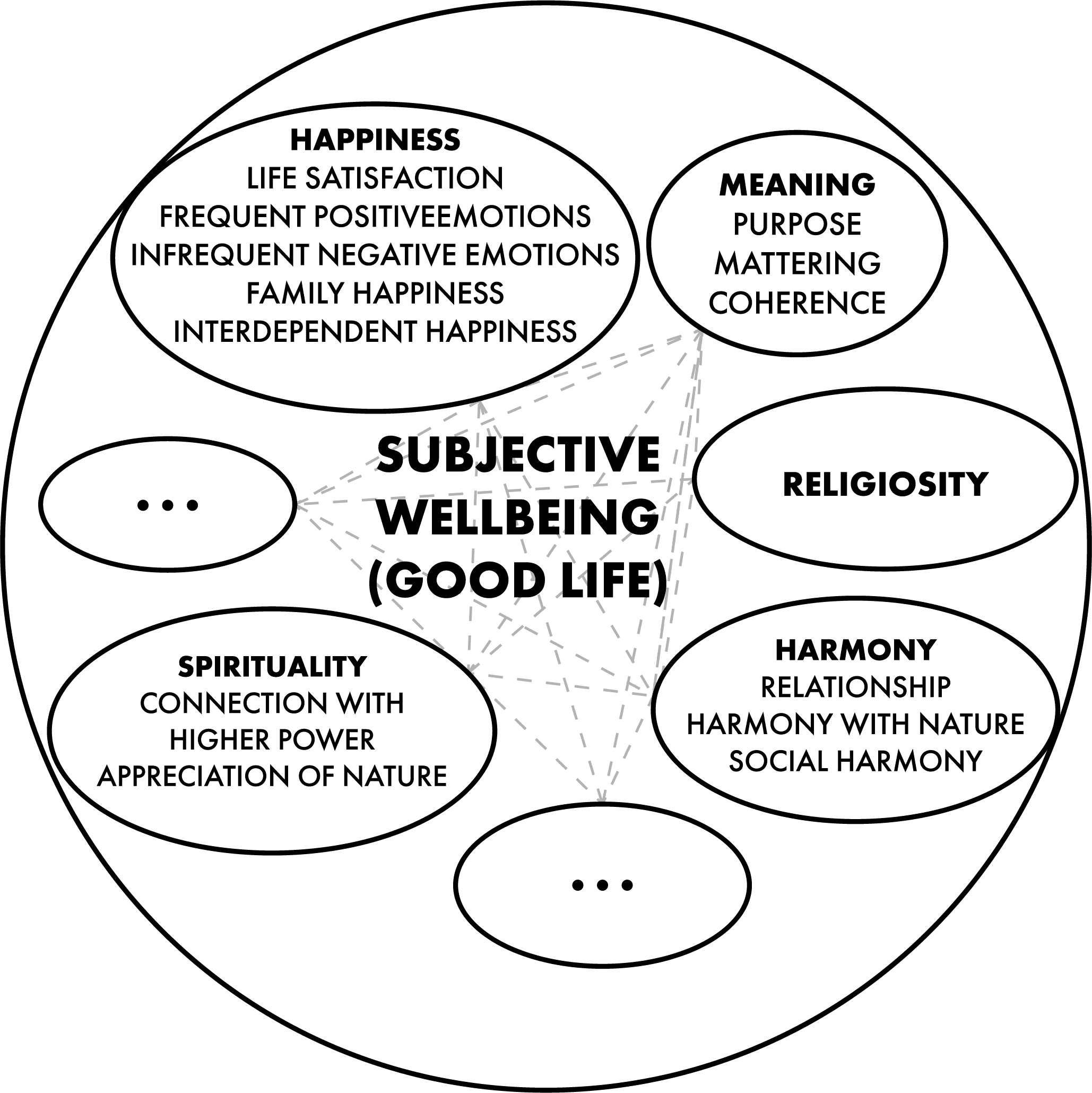
Social sciences suggest that social development should be measured by changes in social well-being. However, measuring well-being accurately and reliably is a challenge. Cultures differ in their understanding and valuation of concepts such as well-being or happiness. As a result, popular simplistic rankings that compare happiness between countries provide an incomplete picture of social well-being.In Western culture it is often equated with happiness, but in other cultures it is interpreted differently and has many components. The pursuit of happiness is particularly characteristic of Western cultural societies and less so of other cultural groups. According to the authors of the study, this may be influenced by the mild climate of Western Europe and the resulting low existential pressure compared to other regions of the world. Satisfaction with life can be achieved in different ways in different parts of the world. In the Confucian culture of Asia, harmony is valued, whereas in sub-Saharan Africa, the Middle East or Latin America, religiosity and spirituality are valued, so visions of the good life may differ Social policy-making institutions should measure quality of life and well-being on the basis of indicators that take account of cultural diversity in order to provide a more reliable picture of the good life in different cultural contexts.
Well-being is an essential element of social development; it should be culturally sensitive, but also sustainable. Tackling climate change, eradicating poverty or ensuring decent living conditions are essential actions for the well-being of present and future societies. Meeting these challenges requires integrated action and cooperation at many complex levels, which is not always easy to achieve. The goals of different countries, groups and individuals may differ, but their harmonisation is crucial for the future of our planet. A study by researchers at SWPS University in Poland clearly shows that individuals’ beliefs have a significant impact on their motivation to pursue common goals, and that a sense of community and convergence of priorities can provide motivation to engage in global challenges. According to the researchers, shaping the right narrative can inspire and build commitment to act for a better future for all.
PROMOTE SUSTAINABLE WELL-BEING
PROMOTE SUSTAINABLE WELL-BEING
Well-being is an essential element of social development; it should be culturally sensitive, but also sustainable. Tackling climate change, eradicating poverty or ensuring decent living conditions are essential actions for the well-being of present and future societies. Meeting these challenges requires integrated action and cooperation at many complex levels, which is not always easy to achieve. The goals of different countries, groups and individuals may differ, but their harmonisation is crucial for the future of our planet. A study by researchers at SWPS University in Poland clearly shows that individuals’ beliefs have a significant impact on their motivation to pursue common goals, and that a sense of community and convergence of priorities can provide motivation to engage in global challenges. According to the researchers, shaping the right narrative can inspire and build commitment to act for a better future for all.
The challenges we face are collective in nature and, as such, require collective action to meet them. Understanding what creates a sense of shared reality in the nation can help us act to develop our country more effectively.

CONSTRUCT CIVIC ATTITUDES
Today, social researchers and policy-makers commonly treat individualism – a psychological characteristic of Western societies – as the universal psychological ‘software’ that underpins processes of societal development and well-being. However, the argument linking indivi¬du¬alism to societal well-being is seriously flawed. Consequently, a new psychological compass for research and policy-making on societal development is needed. International governing bodies should turn to civicness – a way of being in which an individual, when faced with a dilemma, prioritises the good of the larger community unit of which he or she is a member over the good of the smaller community unit. The civicness framework helps to understand and develop a variety of social bonds that bind communities together, well beyond purely Western cultures.
Norway is often regarded as one of the best places in the world to live, and Norwegian social policy solutions are described as exemplary. The Scandinavian social model – based, among other things, on social equality and a balance between individual autonomy and a high level of pro-sociality – shows that a high quality of life and social well-being are the result of a long history of social development in the North. A comparative study by Nina Witoszek and Mads Larsen of the University of Oslo highlights the influence of historical and cultural context on action, using the example of different models of cooperation and altruistic strategies in Poland and Norway. Their research shows that while it is necessary to adapt social policies to local conditions, it is equally important to seek inspiration and learn from cross-cultural experiences.
LEARN FROM BEST PRACTICES
LEARN FROM BEST PRACTICES
Norway is often regarded as one of the best places in the world to live, and Norwegian social policy solutions are described as exemplary. The Scandinavian social model – based, among other things, on social equality and a balance between individual autonomy and a high level of pro-sociality – shows that a high quality of life and social well-being are the result of a long history of social development in the North. A comparative study by Nina Witoszek and Mads Larsen of the University of Oslo highlights the influence of historical and cultural context on action, using the example of different models of cooperation and altruistic strategies in Poland and Norway. Their research shows that while it is necessary to adapt social policies to local conditions, it is equally important to seek inspiration and learn from cross-cultural experiences.
There is an important practical conclusion to be drawn from our research: it pays to be open to creative cross-cultural collaboration that leads to innovative and effective solutions. The work of improving quality of life and well-being begins with rethinking the model of education, from kindergarten to university. A world in crisis needs more innovation in pedagogy and education that teaches societies to work better together, to accept compromise and to build coalitions.

TOWARDS A TRULY GLOBAL CULTURALLY SENSITIVE MODEL OF SOCIETAL DEVELOPMENT
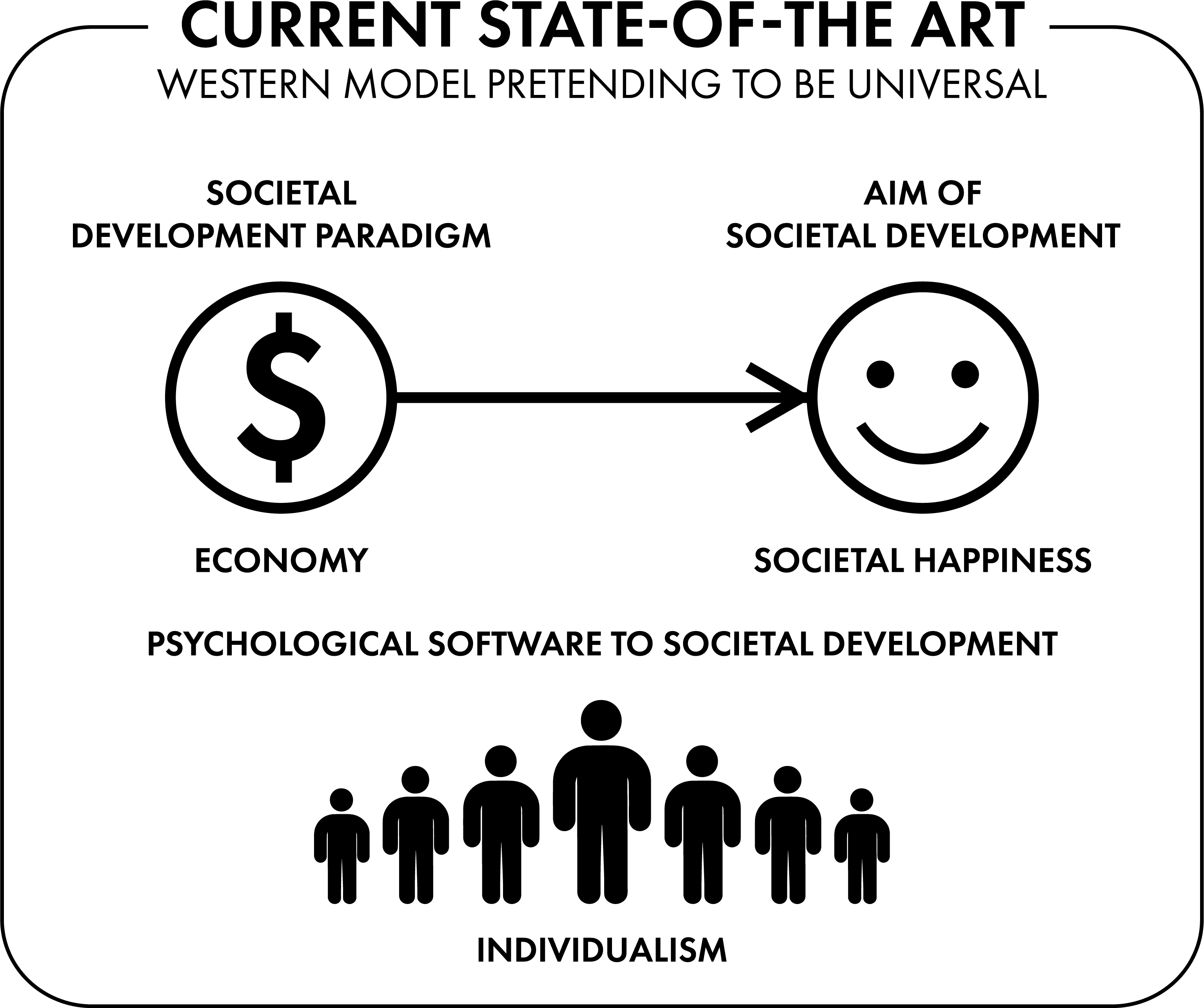
In light of the above, we propose an evolution from the Western-centric model of societal development (which emphasises economic growth, takes societal happiness as the end state, and is driven by psychological individualism) to a culturally sensitive model of societal development. This new model recognises a variety of pathways of societal development, adopts culturally defined concepts of subjective well-being as an end state, and is driven by psychological civicness. In the face of pressing global challenges and the need for collaborative efforts to address them, the study of societal development and well-being in a culturally sensitive and sustainable manner seems not only relevant but imperative.
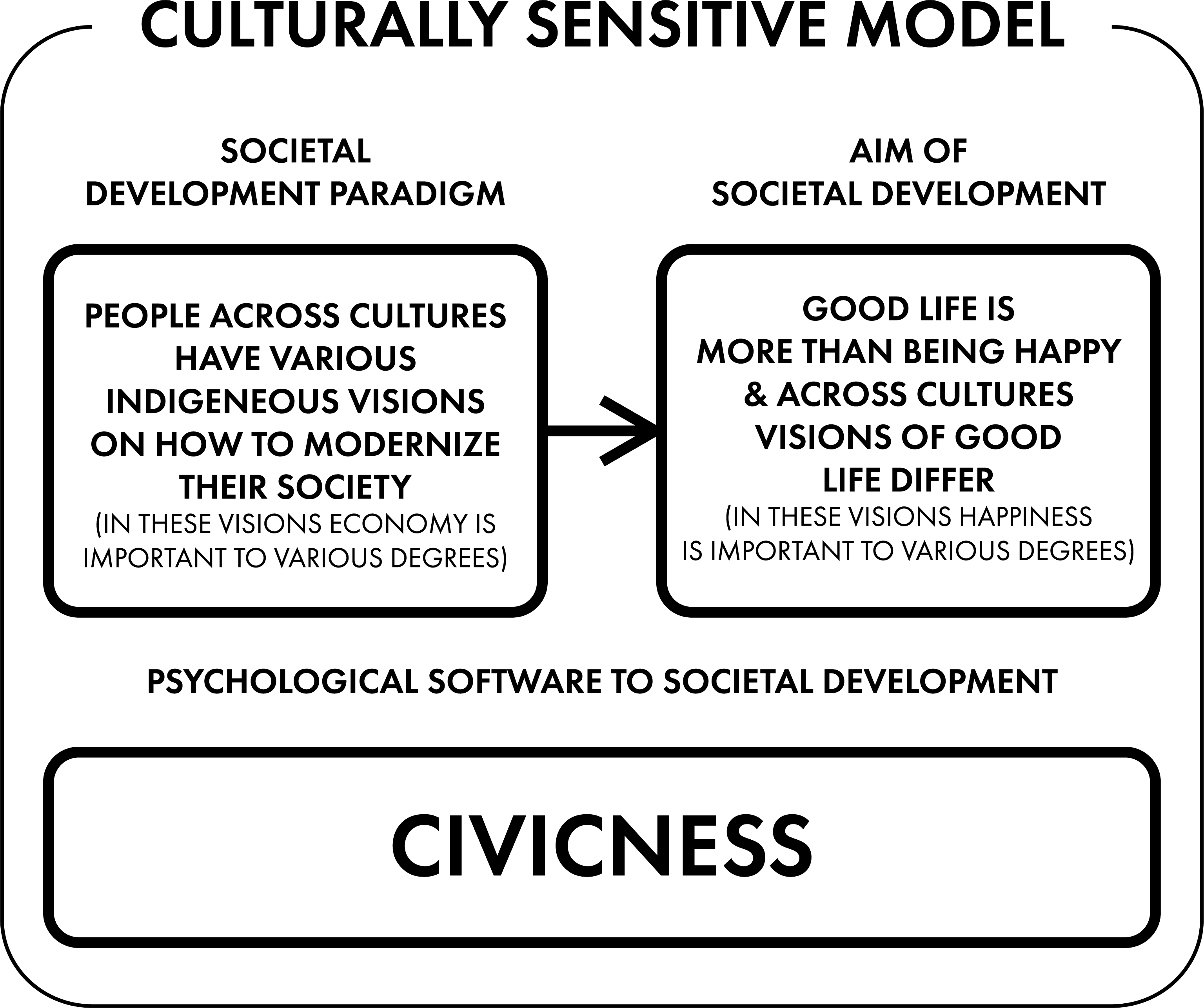
People can live a good life in a variety of ways; there are numerous recipes for societal flourishing. Policy-making and research on societal development should take into account the diversity of cultural contexts and expectations. Our empirical research demonstrates that across cultures, lay expectations towards societal development generally prioritise various social aspects of modernisation. Therefore, by adopting a culturally sensitive paradigm, policy-makers can effectively fine-tune policies to indigenous visions without a significant risk of halting modernisation.
About the report
Every society has not only the right to development and self-determination, but also the right to choose the direction of its development. How do we measure social development? What are the desired directions of development in different societies around the world? How can well-being and social engagement be developed in the face of global change?
The Institute of Psychology of the Polish Academy of Sciences, SWPS University of Social Sciences and Humanities and the University of Oslo conducted a number of studies, including an extensive cross-cultural study, the aim of which was to examine the processes of social development and understand them from a perspective sensitive to cultural differences.

Team
Research project management:
- Kuba Kryś – kkrys[at]psych.pan.pl
- Marta Roczniewska – mroczniewska[at]spws.edu.pl
- Nina Witoszek – nina.witoszek[at]sum.uio.no
The project team:
Piotr Błaszczyk, Agata Gąsiorowska, Kaja Głomb, Maciej Górski, Anna Kuźmińska, Mads Larsen, Magdalena Marszałek, Paweł Mordasiewicz, Katarzyna Myślińska-Szarek, Mateusz Olechowski, Ewa Palikot, Ewelina Purc, Hanna Vanedskog, Arkadiusz Wąsiel, June Yeung
Local team leaders in the international Live Better research consortium:
Adil Samekin, Agata Kocimska-Bortnowska, Agnieszka Wojtczuk-Turek, Agustin Espinosa, Aidos Bolatov, Alejandra Domínguez Espinosa, Aleksandra Kosiarczyk, Alexander Malyonov, Alin Gavreliuc, Ana Maria Rocha, Ángel Sánchez-Rodríguez, Anna Almakaeva, Anna Kwiatkowska, Arina Malyonova, Arina Malyonova, Arkadiusz Wąsiel, Arno Baltin, Ayu Okvitawanli, Azar Nadi, Azhar Hussain, Beate Schwarz, Belkacem Yakhlef, Biljana Gjoneska, Boris Sokolov, Brian W. Haas, Cai Xing, Carla Sofia Esteves, Charity Akotia , Chien-Ru Sun, Christin-Melanie Vauclair, Claudio Torres, D. M. Arévalo Mira, Danielle Ochoa, David Igbokwe, David Sirlopú, Diana Boer, Elke Murdock, Elmina Kazimzade, Eric Kenson Yau, Eric Raymond Igou, Espen Røysamb, Farida Guemaz, Fatma Mokadem, Fridanna Maricchiolo, Fumiko Kano Glückstad, Grace Akello, Hannah Lee, Heyla Selim, Hidefumi Hitokoto, İdil Işık, Isabelle Albert, Iva Poláčková Šolcová, Jae-Won Yang, John Zelenski, Joonha Park, Jorge Vergara-Morales, Julien Teyssier, June Yeung, Katharina Henk, Kiều Thị Thanh Trà, Kongmeng Liew, Laura Andrade, Lenka Selecká, Lily Appoh, Liman Man Wai Li, Linda Mohammed, Lucie Kluzová Kracmárová, Maciej Górski, Magdalena Garvanova, Magdalena Mosanya, Mahmoud Boussena, Maria Stogianni, Márta Fülöp, Marta Roczniewska, Martin Nader, Marwan Al-Zoubi, Mary Anne Lauri, Mateusz Olechowski, Md. Reza-A-Rabby, Michael H. Bond, Mladen Adamovic, Mohsen Joshanloo, Moritz Streng, Morten Tønnessen, Mostak Ahamed Imran, Muhammad Rizwan, Natalia Kascakova, Natalia Soboleva, Natasza Kosakowska-Berezecka, Naved Iqbal, Nicole Kronberger, Nina Witoszek, Nuha Iter, Nur Amali Aminnuddin, Nur Fariza Mustaffa, Olga Kostoula, Olha Vlasenko, Oriana Mosca, Oumar Barry, Pablo Eduardo Barrientos, Patrick Denoux, Petra Anić, Plamen Akaliyski, Rafail Hasanov, Ragna Benedikta Garðarsdóttir, Rasmata Bakyono-Nabaloum, Resham Asif, Rosita Sobhie, Ruta Sargautyte, Tamara Mohoric, Ursula Serdarevich, Vaitsa Giannouli, Vassilis Pavlopoulos, Victoria Wai Lan Yeung, Vivian L. Vignoles, Vivian Miu-Chi Lun, Vlad Costin, Vladimer Gamsakhurdia, Vladimir Turjačanin, Vladyslav Romashov, Wijnand van Tilburg, Yukiko Uchida, Yvette van Osch, Zoran Pavlović
About the project
Some of the conclusions presented in this report are based in part on research financed by the National Science Center, the beneficiary of which is the Institute of Psychology of the Polish Academy of Sciences (projects #2020/37/B/HS6/03142 and #2020/38/E/HS6 /00357).
The Norway Grants and the EEA Grants represent Norway’s contribution towards a green, competitive and inclusive Europe. Through the Norway Grants and the EEA Grants, Norway contributes to reducing social and economic disparities and to strengthening bilateral relations with beneficiary countries in Central and Southern Europe and the Baltics. Norway cooperates closely with the EU through the Agreement on the European Economic Area (EEA). Together with the other donors, Norway has provided €3.3 billion through consecutive grant schemes between 1994 and 2014.Norway Grants are financed solely by Norway and are available in the countries that joined the EU after 2003. For the period 2014-2021, the Norway Grants amount to €1.25 billion. The priorities for this period are:
#1 Innovation, Research, Education, Competitiveness and Decent Work,
#2 Social Inclusion, Youth Employment and Poverty Reduction,
#3 Environment, Energy, Climate Change and Low Carbon Economy,
#4 Culture, Civil Society, Good Governance and Fundamental Rights,
#5 Justice and Home Affairs.
For more, please visit: www.norwaygrants.org
